Showing posts with label writing craft. Show all posts

Saturday, October 19, 2013

Magic in the mundane


I am a paranormal romance writer, so I dabble in a fair bit of magic. Yet, it is not the literal kind of magic I’m talking about today, because all writers dabble in a kind of magic -the magic of making the mundane in something readable and engaging.

So much of writing involves descriptions of the potentially very boring. From a description of a house or someone’s paisley carpet to the drudgery of walking down a shopping aisle – it is important to build the scene for your characters, the magic is making what is ordinary still interesting to read.

Showing and not telling is mantra often repeated by writers, but how is it done? Let me show you…
I am currently sitting in a large draughty gymnasium on a Saturday afternoon, whilst my child does sport. This gymnasium is a pretty worn, bog standard suburban community centre.

There, I’ve “described” it at least superficially, and you’ve probably got a little bit of a picture in your mind, but… there’s no magic in that is there? Not really.
To really take a reader into the scene, you need to consider three things;
1. What it looks like – lighting, structure, surfaces.
2. What it smells like – this is so often neglected by authors, but really packs a punch when used well!
3. What it feels like: this is important both physically (temperature etc) and emotionally.
Details of the mundane however, should never be dumped in a single paragraph – that would be boring. The reader should ideally discover these things as the character does. A character noticing the scratched wooden floor, or the smell of something nasty in the air as she passes will quickly pique a reader’s interest.

So here is a gymnasium scene:

She sat on the hard pine bench, the bones in her butt beginning to throb
Damn, it was cold.
The bleak fluroescent lighting of the gymnasium made her eyes water, and not a soul graced the scratched parquetry basketball courts – at least not a soul she could see, anyway.

She wanted to leave. She wanted to go home, but she couldn’t. So she’d just have to patient and breathe the faint unsanitary stink of old sweat and feet left by the countless sportmen over the years a little bit longer. Yes, she would wait, wait until it was over…


And that is how the writer can put magic into a dull, boring scene to bring it to life!
Have a fabulous Sunday!

Saturday, October 12, 2013

How to write a story - my way...

I get asked these two question all the time.
 
'Where do you get the ideas?'
'How do you start these stories?'
 ... 
Allow me to explain how the initial creative process works for me....

Where do I get the ideas?

Basically, everywhere and anywhere, but there are two main ways I get ideas for stories.

1. Seeing something.

  • Sometimes, I will see something, that sparks an idea in my mind. The most random inspiration I had was from seeing a greasy hand mark on a bus window, from where someone had clearly tried to bang on the bus window to stop it from leaving without them... or at least that is what I imagined. From this, my flash fiction (one day to be a full story) Good Girls Don't Talk to Satyrs, was formed. That germ of a concept was formed well over eleven years ago, when I was catching a bus to work, and happened to sit at seat next to which the window had a greasy hand print on. When I looked at that hand print I remember imagining some poor sweaty soul racing after the bus, as it takes off, leaving him behind... it often happens, I'm sure you've seen it yourself.

  • I have long said that I'm frequently manspired, so I don't think I need to re-hash how inspiring I find watching male characters on TV interact with others. Contrary to popular belief, I don't simply focus on the males because I like to perv (which may have a small ounce of truth to it - but no more)... I believe I focus more on the male side because as a woman, I'm more familiar with the ways in which a woman would typically react in a certain situation, whereas the men take more research... So watching how men react and interact with others either in real life or on screen is very helpful and inspiring as a writer.

  • Or I just open a mythical creatures book and choose a creature at random and then think of all the different kinds of ways I could incorporate them into a book.

2. Feelings and memories.

This is kind of hard to describe, but I often go to a place and get a "feeling" about it.  I travel a lot, and sometimes when I'm passing through a worn, empty, dry  outback Australian town I get a sad feeling about the place, and I think about all the things that may have been there, eg: it might have been a vibrant growing community once, but now is run-down; home only to a few die-hards who have no where else to go, or don't want to leave. Remembering how places and situations felt emotionally, is powerful fodder for a book.

Another example of this was when I was down in Margaret River. This area is an increasingly trendy place to be, with surf competitions, wineries, breweries, vineyards, forests.... It really is quite a lovely place to visit. Yet allow me to recall a particular scene that has long fascinated my writing mind. My family and I were having an uber expensive coffee at a trendy café. This café appeared to be run solely by teenagers who seemed to care more for conversing with each other than the coffees they were supposed to be brewing... Anyway, as we sat there drinking our luke-warm coffee, a woman  walked in. She was dressed in black and white striped tights with black shiny boots, a green tunic with a black belt cinched around her waist and shocking orange dyed hair. As I attempted to discretely observe her, I heard my husband mutter; "If we do not leave this café now, I'm going to grab that leprechaun and find out where she keeps her gold...."
Obviously he was joking, but I nearly spilt my coffee laughing. She did indeed look like a leprechaun - and it shows just how much living with paranormal writer has affected my husband! However, the situation got me thinking about how ridiculous the 'trendiness' was getting in the area. I looked at the leprechaun lady, she no doubt thought she looked fab-oh!  But really she looked quite bizarre.  The feeling and thoughts that this strange scene evoked however were very inspiring. The dichotomy between reality and individual perception is fascinating.  It then becomes something of muse, as I am able to think about where I could place that kind of plurality in a book.
 
So, how do I start the story?

I am perhaps unusual in that I find it incredibly easy to start stories, I actually have 9 stories that are on hold at the moment, and I could start countless more if I let myself... It's choosing which one to finish that is the problem.
I start with imagining my main character (male or female)
Then I think about what would be one of the worst things that could happen to them. Then I consider what would have happened to them to find themselves in that situation.

For example;
I have just opened my 'Mythical Creatures Bible' by Brenda Rosen to the page entitled Vila.
A Vila is a nature spirit / fairy hailing from Eastern Europe. They are very beautiful, live in the forest, great healers, but incredibly vengeful against humans who harm them.
It then takes me all of two seconds to create a heroine.

Name: Beata (nice Polish name)
Worst thing that could happen: She's in a terrible accident, has a horrible facial injury and is no longer beautiful and due to the nature of her accident is unable to heal herself and is scarred for life. Who would ever love a Vila so disfigured? This might call for a little vengeance and salvation from guess who? Your sexy hero of course! (who also has a few demons of his own)!

From this idea, I can then write the first paragraph.

Her eyes were heavy as she struggled to focus, but the world appeared white and gauzy. Her eyelashes brushed against material pressed close against her face, obscuring the world from sight. Unfamiliar voices sounded around her, they seemed distant and muffled.
What the hell?
Beata's throat tightened, panic made her heart lurch.
Where am I?
Her hands flew to her face, trying to remove the cloth that blinded her, but found her hands swiftly captured by others.
'Miss Myszka, please stop.'
The sound of her own name made her freeze.
'Where am I?' she asked.
There was a long hesitation, 'You're in hospital, there has been an accident.'

 ...
 
And that, is how I start a story!
Have a great weekend!


Tuesday, December 11, 2012

Making Myths Real III - creating the Thriae.

Today I'm showing you how I'd make a mythological creature 'real' in my writing.
 
I've chosen a rather random mythological insect, who hails from Greek Mythology, namely the Thriae.

[image; B. Rosen]

Beastly Facts
Name: Thriae (also known as Thriai)
Origin: Greek Mythology
Creep Factor: 1/10
Religious affiliation: Ancient Greek Pantheon
Deadly rating: Low
Cryptid: No
Shares similarity with: Melissae, Melissai


Brief and Basic History: The Thriae are closely linked to the Melissae (bee demigods/nymphs). Originally the Thriae were three nymphs (Melaina, Kelodora and Daphnis), who were oracles/soothsayers who used pebbles as a means of divination. The myths say that the nymphs were part woman and part bee, and lived somewhere around Mt Parnassos. They would tell fortunes and fed exclusively on honey, often they were described as being sprinkled with white/yellow meal, which was allegedly the pollen from the flowers.

Homeric Hymn 4 to Hermes 550 ff (trans. Evelyn-White)
(Greek epic C7th to 4th B.C.) :
[Apollon says to Hermes:] ‘There are certain holy ones, sisters born--three virgins gifted with wings: their heads are besprinkled with white meal, and they dwell under a ridge of Parnassos. These are teachers of divination apart from me, the art which I practised while yet a boy following herds, though my father paid no heed to it. From their home they fly now here, now there, feeding on honey-comb and bringing all things to pass. And when they are inspired through eating yellow honey, they are willing to speak the truth; but if they be deprived of the gods' sweet food, then they speak falsely, as they swarm in and out together. These, then, I give you; enquire of them strictly and delight you heart: and if you should teach any mortal so to do often will he hear your response--if he have good fortune. Take these, Son of Maia . . .’

Without giving too much away, I intend on using a version of the thriae in my next book. To use such an unusual creature, I am going to have to work hard to make it realistic and believable. Below is a step by step guide of how I will do it.

 Biological Realism is important.

Let face it, a human torso in insect body... How is that going to work...ever?!

Well, lets look at biology, and see how we can manipulate it.

a) Choose a type and a stick with it.
I am going to make my thriae almost entirely insectivorous, because mammalian vascular systems could never work in harmony with an insects  - there are simply too many differences. Unless I'm going to use the blanket "it's just magic" comment over it, we're going to have to do some research.

b) Know your basic biology.
Google is great! I also have countless biology books in my home library (yes, I did Biology 101 at University). Look at the diagrams!
If I want my thriae to be more bee-like than human internally, this is going to mean some serious physiological reasoning.
For example; Within the thorax/torso of my thriae, there will be no lungs. Being small and insectivorous they'd breath through spiracles and trachea. Therefore making them speak in a way that is intelligible to the average human is going to be problematic.

So how could I make the Thriae talk?
The biological realities are; that to speak they'd need vocal cords. Vocal cords are not muscles, but pieces of soft tissue with muscles surrounding them. These muscles around chords that cause them to loosen or tighten and it is the air passing through the vocal cords that make sound.
Here lies a big problem; the spiracles through which an insect breaths are located on the exoskeleton (thorax and abdomen, not the head). They allow allow air to enter the trachea. The tracheal tubes deliver oxygen directly to the small creatures tissues (this is one of the reasons that in our atmosphere insects can only grow upto a particular size as the respiratory system isn't complex enough to support a large body).
So assuming the thriae are insectivorous internally, and do not have lungs - they couldn't make vocal cords vibrate and therefore they couldn't speak through their mouths.
Hmmm. I have two options here, I can think of a way to make them speak biologically, or I can use literary license and say they speak through 'magic'. As I'm always up for a challenge, I like to investigate the posibility of speech through spiracles.

c) Do MORE research...
Ask yourself the questions!
Could spiracles move enough air to make sound? I don't know!!.. so I  did some more research. discovered that there is a very special catepillar named the walnut sphinx catepillar that can actually whistle. It does this through contorting its body and pushing air through the spiracle. This only occurs at the eighth spiracle (article; http://jeb.biologists.org/content/214/1/ii.short). Woo hoo!

So, if I want my thriae to talk (which I do), they're going to have make speech-like sounds through their spiracles and some type of muscle and chord system arrangement there, not through their mouths.
Therefore with a few minor manipulations of biology, my thriae will be able to speak a pseudo human language, albeit not through their mouths, but rather though a hole somewhere near their arse.
 
Sorry, that was low brow.
 
There are of course other complications that will need to be addressed. For example the endo- verses exo-skeleton problem with the existance human torso/bee abdomen.
Well, I've already stated that they have bee-internals so I'm going to have to continue the insect-theme and give them an entire exoskeleton. To do this I'll look at some other  insects that have interesting faces.
[stick insect]
Bee
damselfly.
Dragonfly
 Strangely cute aren't they?
 
So now, I can imagine a humanish head, but add insect features to it.
They additionally would have no neck, merely a flexible joint between the the head and thorax. Additionally, the six legs of an insect generally all stem from the thorax (torso in the thriae). So we'd have to add segmented legs, that could be made to move the creature in a realistic fashion and a modified first pair of legs that the thriae would use as 'arms'.
 
d) Sketch it.
You don't have to be an artist, but give it a go, it will help you understand the dimensions of your creature better, and envisage its movements with greater ease. I love to draw and paint so I find this particularly enjoyable, and my pin-board is covered in random sketches :)Below is my sketch of 'my' thriae (complete with my cat's paw - he's everywhere you want to be).

Suffice to say, my thriae doesn't look as cute as the other images, but you get the idea. :)
 
Finally....
 
d) Remember this IS fantasy.
Yes, I like to go over the top with research to make things realistic, but it is also important to realise that the creatures of myth and magic do not have to be completely realistic to be readable. After all, they're not real. A biologist I'm certain would be able rip apart my biological reasonings and explain millions of reasons why things would probably not work. However, it's just that little germ of possibility,  that adds something special to a novel. 
 
It is also important to understand that despite all the research and cool facts you discover, the information must not dumped into the story like a text-book. Indeed, some of it may not be even mentioned at all. It's a shame, but when you come across a reader or fellow mythology/biology nut you'll always have something to talk about.
 
And on that note, enjoy your Wednesday!


Saturday, December 1, 2012

Making myths real II -Going dental

Teeth are so important. Our heroes need good teeth, but what about our creatures?

I'm currently writing about a potential fight between an Aufhocker (see my earlier post) and a Werewolf. To get it right I went researching (I'm a nerd, I'm allowed). Who would win, what bite patterns would happen? Are their teeth tearing teeth or chewing teeth?

General concensus seems to indicate that aufhockers, (like werewolves) have canid (dog-like) teeth.
Canid teeth meet together in a scissors like action - a sure indication of a raw food diet. They have fangs for grabbing and puncturing, incisors for nibbling, premolars for tearing, and molars for crushing bone. Unlike herbivores which only have molars that are used for grinding food and mashing grasses, leaves and other vegetable matter, canine teeth are more for slashing, cutting and tearing.

This gives me a better indication of how and what a fight between a werewolf and aufhocker might play out - it also got me looking once again about making mythological creatures real in your writing.

Macabre as it may seem I went searching for teeth and skulls on the internet. I remember when writing about Devika the naga (from Magical Creations and Redemption) that I went looking at the teeth and fangs of a black-mamba. Devika, being a naga, has flick down fangs that drip venom and a black mouth - just like the black mamba snake. I remember considering how I would make her fangs real. This is one of the images I used as a reference for her. Her fangs could retract in sheaths then flick down when she wanted to envenomate a victim...

This then got me thinking about the skull formation of the aufhocker. I imaging it being something similar to that of a werewolf as an aufhocker often described as a canid shifter. To the left is a mock-up skull of a shifted werewolf (complete with bullet hole in the centre of the forehead!) that I sourced from google images. You can see that the artist has used dog/wolf teeth, placed in a humanoid/canine blended skull.

Below is a diagram of a normal human skull for a comparison. You can see in the werewolf-mockup that the  lower mandible (jaw) is significantly narrower than that of the human. This would indicate  that the mouth could open wider than a human. The average human can apparently open their mouth 3 - 4 cm from tip to tip of the inscissors. A wolf can get up to 12 cm or more. Thats a 3 or 4 times larger bite area than a human jaw could make. Additionally the nasal cavity of the werewolf is much larger, and also has the two maxilliary recesses on either side of the larger cavity indicating a heightened ability to smell. Unlike the a dog however, the werewolf skull has a human formed super-orbital torus (brow ridge), indicating that the face of the werewolf is not completely canine in appearance but the upper portion of the face remains human-like.
Facinating stuff!

I now have a pretty good idea of how hideous a fight between  an aufhocker and werewolf would be. Combine the mutated canid head with claws and a hell of a lot of upper body strength and you've got a battle of epic proportions!

Here's an interesting diagram of how a 'shift' might take place. You'll notice however, in this artist's rendition that the superorbital torus virtually disappears, resulting in much more canid features...


Below is a gallery of interesting mythological and real skulls that might be useful as a reference later on.


Cat Skull - note the huge orbital cavities (eyes!)


Black Spider Monkey Skull - blunt inscissors,

Owl Monkey - check out the teeth and eyes!

"Dragon Skull" - small nasal and eye cavities with tearing teeth.


Viper skull - rear facing teeth to hold onto prey
whilst injecting venom.


Have a lovely Sunday and happy writing / reading!


Saturday, November 17, 2012

Tight Pants Syndrome...curse of the romantic Hero.

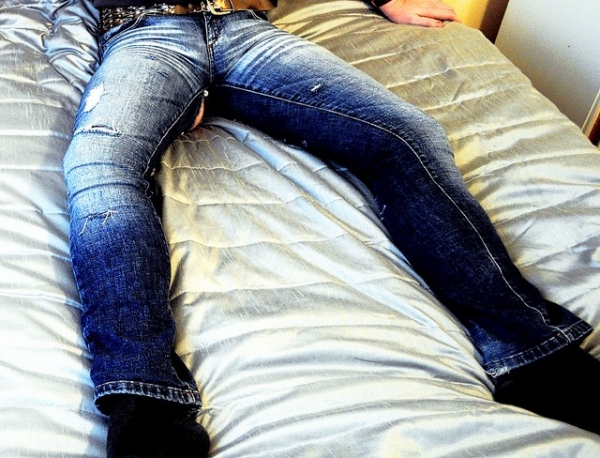
I'm not going to over-share, but I had an experience with Tight Pants the other day, and rest assured those jeans will not be seeing daylight anytime soon.  However, the uncomfortable day got me thinking about the huge number of (particularly paranormal) romance heroes that wear some very tight pants.
I'm sure most of you are aware of a condition called "Tight Pants Syndrome" aka TPS. This is when a man in particular becomes plagued with 'trouble down under' due to wearing excessively tight pants.

The term was originally coined in a 1993 article by Dr. Octavio Bessa, an internist in Stamford, Conneticut. Bessa described a collection of gastrointestinal symptoms including abdominal pain, heartburn and reflux a few hours after meals that he would see in 20 to 25 men every year. The common thread: All wore ill-fitting pants with waistbands several inches smaller than their bellies, Bessa reported in the Archives of Internal Medicine.

Tight Pant Syndrome has developed from there, an ongoing study by researchers TENA men in England surveyed "2,000 British men and concluded that "tight-fitting jeans can cause urinary tract infections, twisted testicles, bladder weakness and long-term health consequences."

Nice.
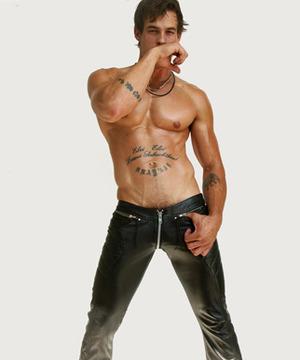
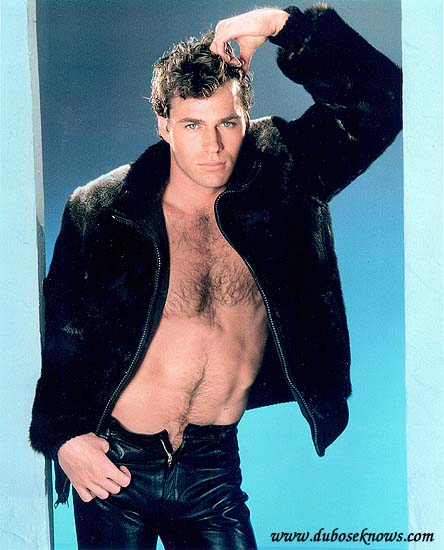
Those nut-hugging leathers on your hero aren't looking quite so sexy now are they?

According to the report, 50 percent of men suffering from TPS experienced groin discomfort and over 25 percent suffered bladder problems. The report also stated that 1 in 5 men experienced a twisted testicle.  A disturblingly high statistic!

Now, considering that most romantic heroes are rather well endowed, the fact that they strut, run and otherwise do fantastic things in tight leather and denim is beginning to feel a little unrealistic to me.


You will also be unsurprised to discover that TPS similarly afflicts women, without going into the seriously nitty gritty, TPS can cause a whole host of gynaecological problems in women as well. So if your heroine is a fiesty one, clad in tight leather -  just consider how long has she been wearing those pants? I don't think I need to say more.

In conclusion; I am not saying that our heroes and heroines shouldn't ever wear tight pants. They are a very useful device in showing the reader your hero's obvious endowment, or his pert backside. They're also practical for the kick-ass heroine who simply couldn't fight Zombies wearing floral callots.

However, it's worth remembering that realism in writing helps build worlds and engages audiences. Perhaps considering the tightness of your characters pants may, in some small way, improve the readability and believability of your tale.

Have a super Sunday!

references: