Saturday, November 17, 2012

Tight Pants Syndrome...curse of the romantic Hero.

I'm not going to over-share, but I had an experience with Tight Pants the other day, and rest assured those jeans will not be seeing daylight anytime soon.  However, the uncomfortable day got me thinking about the huge number of (particularly paranormal) romance heroes that wear some very tight pants.
I'm sure most of you are aware of a condition called "Tight Pants Syndrome" aka TPS. This is when a man in particular becomes plagued with 'trouble down under' due to wearing excessively tight pants.
The term was originally coined in a 1993 article by Dr. Octavio Bessa, an internist in Stamford, Conneticut. Bessa described a collection of gastrointestinal symptoms including abdominal pain, heartburn and reflux a few hours after meals that he would see in 20 to 25 men every year. The common thread: All wore ill-fitting pants with waistbands several inches smaller than their bellies, Bessa reported in the Archives of Internal Medicine.

Tight Pant Syndrome has developed from there, an ongoing study by researchers TENA men in England surveyed "2,000 British men and concluded that "tight-fitting jeans can cause urinary tract infections, twisted testicles, bladder weakness and long-term health consequences."

Nice.
Those nut-hugging leathers on your hero aren't looking quite so sexy now are they?

According to the report, 50 percent of men suffering from TPS experienced groin discomfort and over 25 percent suffered bladder problems. The report also stated that 1 in 5 men experienced a twisted testicle.  A disturblingly high statistic!

Now, considering that most romantic heroes are rather well endowed, the fact that they strut, run and otherwise do fantastic things in tight leather and denim is beginning to feel a little unrealistic to me.


You will also be unsurprised to discover that TPS similarly afflicts women, without going into the seriously nitty gritty, TPS can cause a whole host of gynaecological problems in women as well. So if your heroine is a fiesty one, clad in tight leather -  just consider how long has she been wearing those pants? I don't think I need to say more.

In conclusion; I am not saying that our heroes and heroines shouldn't ever wear tight pants. They are a very useful device in showing the reader your hero's obvious endowment, or his pert backside. They're also practical for the kick-ass heroine who simply couldn't fight Zombies wearing floral callots.

However, it's worth remembering that realism in writing helps build worlds and engages audiences. Perhaps considering the tightness of your characters pants may, in some small way, improve the readability and believability of your tale.

Have a super Sunday!

references:

Friday, November 16, 2012

Book Trailers...

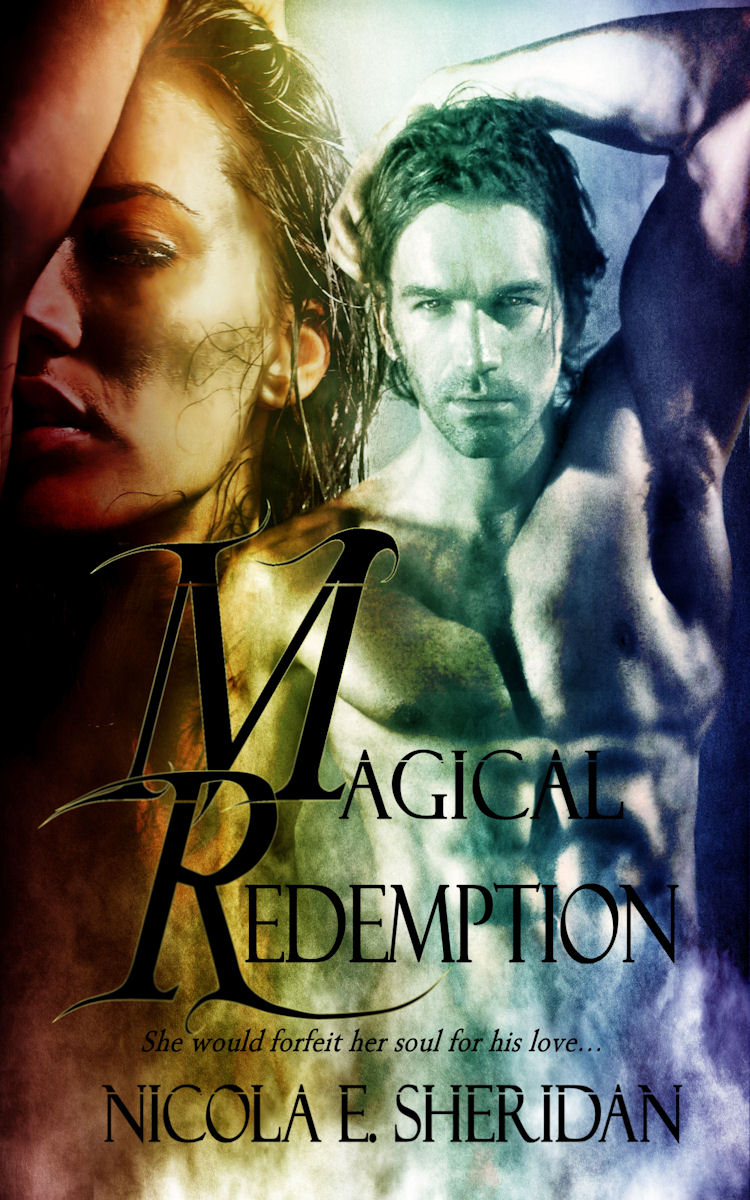
I just made two new book trailers for my novels, Magical Redemption and Magical Gains.

As you can see from watching them, I had a bit of fun. I'm not at all sure they're worth the effort, but still whilst I'm being naughty and not studying and being even naughtier and not writing, I decided I should do something to improve publicity for this series.

This is the "Magical Redemption" Trailer


And this is the "Magical Gains" which is a little quirkier perhaps than Redemption's.


Anyway, I'm curious, do trailers affect your choice of book? Do you seek them out to watch?
I confess that I do not choose to view book trailers, except if I am totally in love with a series and gagging for the next release. Due to my own attitude towards watching trailers, I am sceptical of their usefulness for the lesser known author.

Still, they're fun to make!

What do you think?

Tuesday, November 6, 2012

The Drekavac - a mix of myth and religion...

So many myths stem and grow from religious belief or custom and the Drekavac is a particularly interesting evolution of this.


Preview Image
Name: Drekavac
Origin: Eastern European Myth
Creep Factor: 10/10
Religious affiliation: Christian/Catholic
Deadly rating: Medium
Cryptid: Yes
Shares similarity with: Chupacabra, Banshee

(I have decided to start all my Mythological Beasts posts with a Beastly Facts list, let me know if you think any quick fact should be added.)

The Drekavac hails from slavic mythology, the word literally meaning "the screamer" or "yeller" (Serbo-Croatian).

Described as being a terrible beast with muscular kangaroo-like back legs, and the head and body of a dog - the drekavac is said to arise from the soul of a dead unbaptised child -  a very common theme throughout slavic/eastern European mythology.
The notion that if an individual dies unbaptised, the soul will return and wreak havoc on Earth is one of those enduring fears that thoughout the ages, has has packed many Church pews.

The drekavac allegedly appears most often near a cemetary , sometimes in the form of a creepy looking/ malnourished child, begging to be baptised. It gets its name from the awful screams and cries it emits.
The drekavac can harm people. Some legends claim the scream itself is an omen of death (like the Banshee) and if the beast's shadow falls upon an individual then that person will die.

The creature inhabits tunnels and caves and is reported to eat sheep and cattle. The bodies of mutilated sheep and cattle are often produced as alleged evidence of the drekavac's existance.

Chupacabra
It is interesting that the drekavac has recently moved beyond myth into cryptozoology and as it does, so the link with the soul of the unbaptised child diminishes.There are numerous images over the internet of "drekavac kills" (ie disembowelled sheep, mutilated cows etc). Similarly with it's hunched kangaroo-like legs and fiersome teeth -  the modern descriptions of the drekavac hold a remarkable similarity with the chupacabra (goat sucker of South American myth).

Drekavac
  However, there is one significant difference between the cryptid status of the chupacabra and drekavac. The drekavac has an historical religious origin and was born through mythology, whereas the chupacabra is a modern cryptid currently evolving its own mythology.

 Everything exists for a reason. Looking at the religious meaning behind myths and the beasts within them, gives insight into the reason for the creatures alleged 'existance'. The drekavac is essentially a cautionary tale; "baptize your children, lest their souls turn into this hideous beast when they die." Upon hearing this, what God-fearing slavic peasant would have decided not to baptise their child? In simply understanding this, I understand more about the creature. Combine this with a bit of imagination and you've nearly got a ready-made paranormal tale bursting to be told...
 
Knowing what the creature exists to do in both the mythological sense and the underlying social sense allows a writer develop a creature/character that is not only true to the myth, but also to the culture of origin.
 
 
And on that poignant note, enjoy your day.


Sunday, November 4, 2012

Magical Redemption - Sneek Peek!

Preview Image
 
 
Preview Image
 
Preview Image


Better late than never, I always say, so after a week's delay Magical Redemption will be on sale Wednesday 7th November!
On Wednesday, an excerpt of Magical Redemption will also be available to read over at the Darkside Down Under, so be sure to check it out.
In the mean time, here is an excerpt to whet your appetite.. and guess what? The Satyrs are back!
 
“What do we have here?” a snide voice asked from behind. “You will not find a hospital around here that caters to...his kind.”
There was the clip-clop of cloven hooves behind her. Jinx felt her skin crawl as she turned to face the speaker. Words stuck in her throat. She gazed up the heavy, auburn pelted legs and lingered for just the briefest of moments on the large, exposed genitals hanging between them.
A real, live satyr― just what she needed. She looked upward and jutted her chin. Her defiant gaze was met by curious, auburn eyes and a sharp, angular face. Curling horns erupted from a mane of hair.
“Do you like what you see?” The satyr smiled, showing perfectly-white, blunt teeth.
“No,” Jinx snapped. Using her magic, she rearranged Lucian’s dead weight.
The satyr tilted his head to get sight of Lucian’s face, and his shrewd eyes widened. “What are you doing with Lucian?” he hissed, moving forward with remarkable speed and raising Lucian’s head to examine him. The satyr was suddenly too close. He smelled like fresh hay, and his body thrummed with an unsettling energy.
“You know Lucian?” Jinx whispered. She knew with uncomfortable certainty that this satyr was the reason her magic brought them here.
“Of course I do,” the satyr snapped, his expression now concerned. “What’s wrong with him?” His amber eyes caught and held hers. Although she was fairly confident the satyr was here to help, she didn’t want to divulge everything too soon. She squirmed under his gaze.
“I can’t tell you anything until I know who you are and what you know about Lucian.” Jinx steeled her spine and jutted her jaw, again.
The auburn-haired satyr raised an artful eyebrow. “My, aren’t you a feisty one? I do like my women feisty.” He grinned and sunk into a low bow. “I am Silenus, the stag satyr of the Kuching Free Zone.”
“I’m not your woman,” Jinx said, hating the fact that her gaze was convulsively drawn to Silenus’s naked crotch. “Ugh,” she grumbled to herself.
 Silenus continued unabated. “Lucian is my friend–though, I will confess I have not seen him for many years. Time, clearly, has not been kind to him.” He narrowed his auburn eyes at her speculatively.
“You say that like it’s my fault,” she snapped.
“Is it not?” His eyebrows floated high, again.
“No,” Jinx cried.
Silenus smiled at her outrage. “Allow me to assist you,” he said and stretched out his tanned arms to relieve Jinx of Lucian’s burden.
“No. Don’t touch him.” She jerked Lucian away. His head wobbled grossly as more blood pattered from his face. Dire as the situation was, she couldn’t risk Lucian to an unknown being, supposed friend or not. “I need to test your intent first.”
Silenus’s eyebrows hit his curly hairline. “Test my intent?” A smile tugged on his lips suggestively. “I don’t think my intent needs testing. I make a habit of being perfectly transparent.” He grabbed his crotch and cupped his genitals, proffering them to Jinx.
“Christ,” she gasped and looked away.
 
 
Makes me laugh anyway, I love satyrs!
Enjoy your Monday!


Thursday, October 18, 2012

Dark Beasts of Germanic myth...


Well in my never-ending quest for interesting and bizarre mythological creatures to fit into my novels, my research took me to the myths of Germany, and what treasures I have found!

The first beast worthy of mention is the rather rude sounding Aufhocker... Not a name I'd try and pronounce around small children or members of the clergy...
The word Aufhocker literally means to 'lean upon'. It is a creature that  is said to jump on the back or shoulders of lone wanderers at night, its attack instilling such horror in their victims that they collapse in fright. Although some myths state that the individual collapses not from fright but because once the Aufhocker attaches to a victim it grows dramatically in size/weight. 

You can see in the picture of the Aufhocker statue in Hildesheim (Germany) that the artist of the sculpture has depicted the Aufhocker as a human in shape. However  the actual form and nature of this mythological creature is quite unclear. Interestingly, many stories apparently describe the Aufhocker as a shapeshifter, who may appear in the guise of a dog or a sad old lady (personally the sad old lady guise would be the scariest). However, the link with the dog shape-shifter is interesting because in Belgium there is a  hell hound called the Kludde, whose modus operandi is remarkably similar to the Aufhocker, in that it stalks lonely roads at night, and jumps on the back of travellers ripping their throats out.
However, there are other descriptions of the Aufhocker as a type of zombie (corporal undead), or kobold (type of Germanic imp) or as some type of vampire or werewolf.
According to Wikipedia the Aufhocker is "considered to be a very dangerous theriomorph that tears the throats out of humans. The connection to attacking victims in the throat is what links the aufhocker to vampirism."
(A theriomorph is: a creature (usually a deity) capable of taking the form of an animal)

According to myth, the aufhocker can not be killed. However, as the Aufhocker seems to have been blended with vampirism, lycanthropy and hell-hound mythology thoughout the ages, it is said that they can be driven off by prayer, churchbells, dawn or (this is my favourite) profuse swearing.

The next beast is the Nachtkrapp or Night Raven, is a mythological creature inspired to strike fear into children.
Several versions of the Nachtkrapp exist. In most legends, the Nachtkrapp is described a giant, nocturnal raven-like bird.
The most popular (and hideous) of the legends claim that the Nachtkrapp leaves its hiding place at night to hunt. If it is seen by little children, it will abduct them. The giant bird then flies to its nest whereby it grossly devours the child by first ripping off their limbs and then picking out their heart.
There are of course, other legends, in which the Nachtkrap will merely abduct children by placing them in his bag (how he holds this bag I do not yet know) and take them 'away'.
There is also the Wütender Nachtkrapp (German, lit. Angry Night Raven).  Despite its name, this appears to be a tamer version of the Nachtkrapp; instead of abducting children, it simply crows loudly and flutters its wings, until the children have been terrorized into silence (I personally don't see this as being very effective....)

Image courtesy: Benrey
Then, there is the Guter Nachtkrapp (German, lit. Good Night Raven) is a benevolent version of the Nachtkrapp. This bird enters the children's room and gently sings them to sleep. Clearly the inventer of this myth had never actually listened to the not-so relaxing song of a raven.

The other fascinating beast I discovered in my research is the Nachzehrer - a German Vampire-like creature. This creature however, does not drink living blood, but consumes the dead.
As you may have noted, the Germanic mythologies have much in common with many of the other Slavic and European myths with small differences.

The Nachtzehrer literally translated as "night waster" (also referenced as nachzehrer.)  Is a myth from the Northern region of Germany. The Nachtzehrer is an undead creature easily recognisable by its rather strange habit of holding the thumb of one hand in the other and walking about with only its left eye open.

This creature was believed to have the ability to kill family members through some type of long-range magic. The Nachtzehrer awakens whilst still in the grave. Whilst still entombed, it would begin to eat its own shroud and then feed on its own flesh. As it does this, a member of its family (in the land of the living) would begin to waste away, and the Nachtzehrer gets stronger.

The myth continues to say that at times the Nachtzehrer will rise from it’s grave and feed on the bodies of other corpses. They also are said to find mates in the corpses of  women who have died in childbirth. Apparently, it is possible to track a Nachtzehrer by the the sucking sound it makes (similar to that of a breastfeeding baby).

To become a Nachtzehrer, the individual does not need to be bitten. It is more a case of unusual death circumstances, or epidemic deaths. Additionally, if a child was born with part of the amniotic sac on their head (particularly if it was red), than they were believed to become a Nachtzehrer on death (a little unfortunate for them!). So, to prevent this, the amniotic sac would be dried and preserved, and later fed to the child and this would reverse the curse.
Other preventive measures according to Darkness Embraced (a Vampire mythology site) were: Placing a chunk of earth under the chin of the deceased, placing a coin or stone in their mouths, tying a handkerchief tightly about the neck, placing nets or stockings inside the grave (vampires in northern Germany were said to be compulsive untiers of knots), or being buried face down to avoid its potentially dangerous gaze. Some extreme preventative measures would be to decapitate the head of the deceased, drive a spike in it’s mouth to fasten the head to the ground, or fixed the tongue so it couldn’t move (WTF?) It is important to remember in the past, belief in the arcane was strong, and as life was hard for many, the desire to go to heaven was strong. So any measure that may prevent the dead from rising was regarded as legitimate and at times necessary to ensure that individual finally got their eternal peace.
 

The very last creature I'm mentioning today is of more a inter-European mythological beast and is is truly bizarre. It is called the Chichevache  also known as the anchevache or thingut is a mythical female monster, believed to have survived by eating good and virtuous women...
Courtesy: Deviant art Chichevache
Legends describe Chichevache as a thin cow-faced creature. It was said to be poorly nourished because virtuous women were rare! (Dear me!) Chichevache however, also had a male counterpart, the bicorn (also spelt bicorne or bycorne), which was supposed to have eaten good, kind, loyal and obedient men. The bicorn was well built and healthy, supposedly due to the abundance of good men to feed upon. (Hmmm...you've got to love the misogynistic tendencies of times past...not.)
Chichevache featured in Chaucer's Canterbury Tales. Many French poets also have written ballads about Chichevache and Bicorns.


Anyway, I have spent waaaaay too long on this, and have much work to do, I'm inspired, and ready to write. Hope you found this little sojourn into Germanic myth as fascinating as I did. Have a great weekend!


Wednesday, October 10, 2012

Tick Tock - please stop the clock!

So, Magical Redemption is to be released in a few weeks, I've got edits due in a matter of days, and also two University assignments due on Monday.

I am underpressure - in a way I haven't been in years. I'm suffering choice paralysis, which do I do? Last night I completed one of the assignments and then checked my email to discover more edits waiting... with a note suggesting haste from my editor. So... which to start? Assignment two or edits? I know myself as a creature of habit, that whichever I start, I will want to finish. I don't like jumping from one to the other. Ugh.

To add an extra layer of complexity to the issue, it is also school holidays and my offspring demand attention and no babysitters are available... Hmmmm. So here I am, pondering my problem on the blog, procrastinating even more.

So on that note, I bid you farewell, to flick a coin and decide which to commence first.

...edits it is!

Oh and if you want something to whet your appetite, here's an interview with Lucian, posted up on Lauries Paranormal Thoughts and Reviews....
 http://lauriethoughts-reviews.blogspot.com.au/2012/10/magical-creations-by-nicola-e-sheridan.html?spref=fb


Friday, October 5, 2012

Zombies and Dead Creatures of Myth.

I am fascinated, or perhaps horrified by the resurgence of interest in Zombies... particularly books that categorise themselves as zombie romance... I realise that in most cases the Zombies aren't the romance characters but still... the label "zombie romance"... eeeeew. So to improve my ignorance on the matter, I've decided to do a little research on Dead Creatures of myths, focusing primarily on the Zombie but also touching on some of the others.

As we've established, Zombies have been a fixture in literature and film for many years.  Mary Shelley's Frankenstein; a Modern Prometheus (1818) is often attributed to starting the trend.
Since then, there have been numerous zombie films and books, from Night of the Living Dead (1968) to the Resident Evil film series that started in 2002 and is still going on strong. The walking dead hold a place in the collective imaginations of the world.

Zombies
Versions of zombies appear in the folklore of many world cultures dating back to prehistory.
The etymology of the word Zombie is unclear.
-Some sources say was first used around 1871, from the West African origin (cf. Kikongo zumbi "fetish;" Kimbundu nzambi "god"), originally the name of a snake god, later with meaning "reanimated corpse" in voodoo.
- it may also hail from Louisiana creole word meaning "phantom, ghost,"
- or from Spanish sombra "shade, ghost."
-or Haitian Creole - zonbi
-or North Mbundu - nzumbe
References: here and here

Needless to say, the term is often applied to describe a hypnotized or reanimated dead person without of conscious thought and self-awareness, yet is mobile and able to respond to surrounding stimuli.


The mythological hero Gilgamesh (who hails from ancient Mesopotamian myth) is said to have spurned the advances of a rather vindictive goddess Ishtar who threatened to to mete out her revenge on him by allowing the dead to go up and eat the living. (Sounds like an ancient Zombie Apocalypse to me!)
 
In France during the Middle ages it was believed that a person who had been murdered may rise from the grave to avenge the crime.
  • In 12th Century England, there were allegedly several cases of reanimated corpses (also known as revenants) that were found wandering through villages at night spreading disease and killing anyone they met.
  • In the Caribbean, practitioners of Vodou believe that a Bokor (sorcerer) can revive a corpse, creating a zombie who remains under the sorcerer's power. Other sources say that Vodou sorcerers can turn living people into zombies by giving them a poison made by pufferfish and  entering it into the bloodstream through a wound. The poison induces a hypnotic state in which the person can become a virtual slave of the sorcerer.
  • In Africa there are a number of zombie myths, derived from a west African type of Vodou. There is in West African culture an astral zombie which may be kept in a bottle to provide luck to its owner (quite Genie like!).
  •  In some South African cultures it is believed that a dead person can be turned into a zombie by a small child.It is also believed in some areas that witches can turn a person into a zombie by killing and possessing the victim's body in order to force it into slave labor. After rail lines were built to transport migrant workers, stories emerged about "witch trains". These trains appeared ordinary, but were staffed by zombie workers controlled by a witch. The trains would abduct a person boarding at night, and the person would then either be turned into a zombie worker, or beaten and thrown from the train a distance away from the original location. [Wiki info]
It is interesting to note that zombies in most cultures can be returned to grave by sprinkling salt on them, or on their grave, or by the sorcerer or witch revoking the spell.

Draugr

The draugr come from Norse mythology and were the animated corpses of Viking warriors returned from the dead to attack the living. As the Vikings were buried with considerable wealth and weapons the draugr guarded their treasures fiercely. They were believed to have supernatural strength after they emerged from the grave as eerie wisps of smoke. They killed living things by crushing them, eating them and drinking their blood.

Golem

In Jewish folklore, a Golem is an animated artificial man. Not really a zombie however. The word comes from the Hebrew word gelem which means 'raw material' [Rosen, B., 2010, pp 203]. Traditionally made from clay and animated through magic or religious words being written on its forehead or on a piece of paper in its mouth. There are tales in which medieval European rabbi's  created and animated Golem's to do their bidding. The most famous of which was was created by Rabbi Judah Loew a 16th Century scholar in Prague. According to the legend which is remarkably 'frankensteinesque', Loew created the Golem to protect the residents of a Jewish ghetto from harm. Alas, the creature turned violent and began killing non-Jews before turning on its creator.

Of course there are other dead creatures of myth, here are a few others that come to mind.

Toyol: Malaysian mythology.(Also known as tiyanak in Philippines, Komon-tong/lay in Thailand). The Toyol is a dead fetus/baby that is reanimated and may work with a Bomoh (witch doctor) or other person who feeds it (breastfeed it blood, give it cups of milk etc). The Toyol can be dangerous or mischievious.
Banshee: Celtic mythology, female spirit omen of death (often dressed in bloody rags).
Vampire: Really, do I need to write anything here? The market is flooded with them.

 
And on that note...enjoy your weekend.


    Image links: